
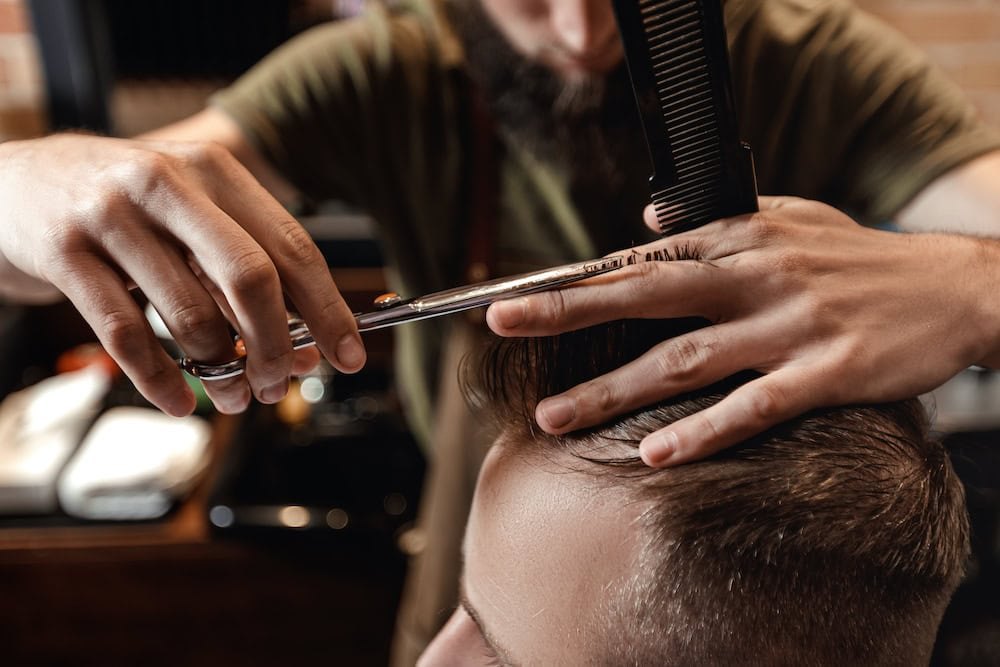
If you’ve got thick hair, you’ve heard “I wish I had your hair” more times than you can count. Sure, thick hair holds shape and photographs well. But anyone who lives with it knows the other side. It puffs out when it grows, fights you in humidity, and can look like a helmet with the wrong cut.
Thick hair needs a different approach. We cut it every day at 18|8 Fine Men’s Salons in 4S Ranch, and we’ve learned what holds up in real life versus what only works in magazine photos. Here are eight hairstyles built for thick hair, plus the product and maintenance advice that makes them last.
Why Thick Hair Needs Its Own Playbook
Thick hair means more follicles per square inch, often with wider-diameter strands. That gives you a lot of raw material, but it also creates challenges guys with fine or medium hair never deal with:
-
It builds volume fast. Two weeks of growth on thick hair looks like a month on fine hair.
-
It resists lying flat. Styles that sit close to the head require more product and technique.
-
It holds texture well. This is your advantage, thick hair takes to layers and movement better than any other type.
-
It can look heavy. Without thinning or layering, thick hair turns into a block shape as it grows out.
-
It responds differently to products. Lightweight products disappear. Heavy gels make it crunchy. You need the middle ground.
The styles below work with these properties instead of fighting them. All of them look good on day one and still look good a week later.
8 Hairstyles That Are Made for Thick Hair
1. The Textured Crop
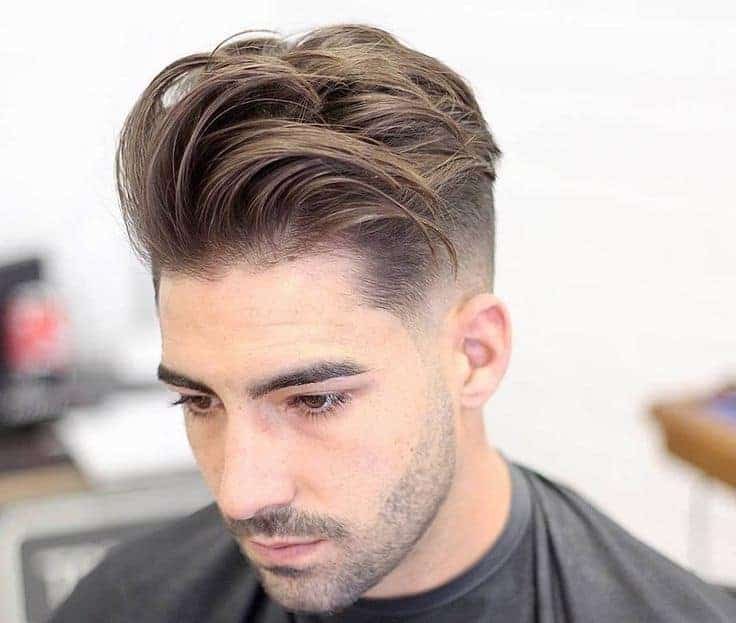
The textured crop is arguably the single best style for thick hair. The top is kept at 2-3 inches with choppy, point-cut layers that break up weight and create movement. The sides are tapered or faded. Thick hair naturally holds the separated, piece-y look that guys with fine hair fight for with product, a small amount of matte clay through damp hair, and you’re done.
Ask your barber for: A textured crop with point cutting on top and a mid to low fade on the sides. Tell them you want the weight taken out of the top without losing the length.
2. The Modern Pompadour
Thick hair and the pompadour are a natural match. The pompadour needs volume and height, exactly what thick hair provides without effort. The modern version is less Elvis, more relaxed, and the front sweeps up and back with natural texture, the sides are faded tight, and the whole thing feels clean but effortless. At 18|8, it’s one of our most-requested styles, see our pompadour haircuts page for more.
Ask your barber for: A modern pompadour with a skin or low fade on the sides and 3-5 inches on top to sweep back. Mention that you want some texture, not a solid wall of hair.
3. The Classic Side Part
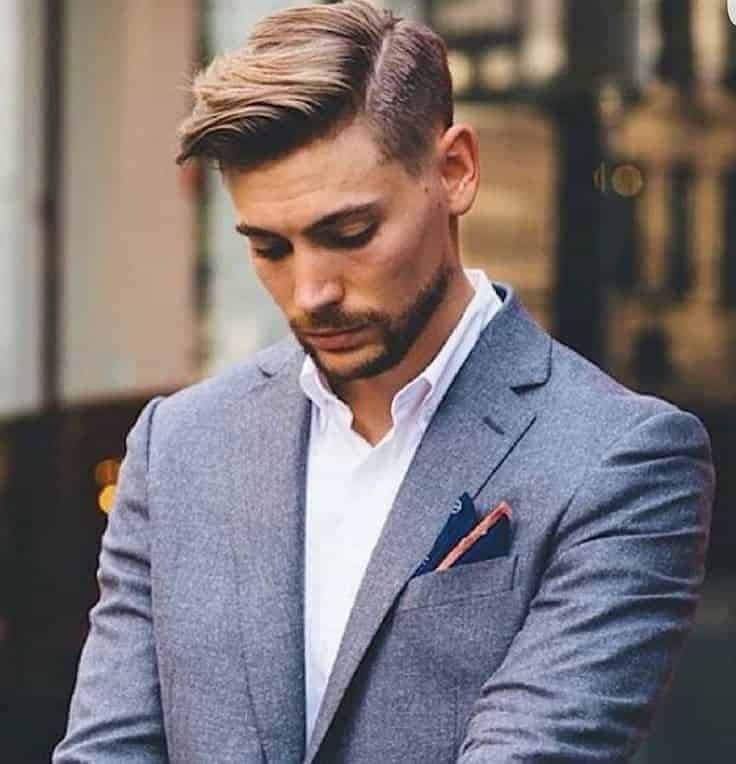
The most versatile style on this list, boardroom to barbecue, depending on how you style it. On thick hair, the parted section sits with weight and intention, not floppy and flat. The key: your barber should thin interior layers so the top lies naturally without poofing above the part. Scissor-tapered sides work better than a hard undercut, which creates a disconnect as thick hair grows.
Ask your barber for: A side part with interior thinning and a taper on the sides. Check out our full menu of men’s haircuts for all the options we offer.
4. The Quiff
The quiff is the pompadour’s more relaxed cousin, the front sweeps up and slightly to one side with natural movement. It’s one of those styles that looks like you spent time on it but actually takes two minutes with thick hair, because your hair already wants to do this. The style looks best slightly imperfect, with a few strands breaking free, some natural wave showing through.
Ask your barber for: 3-4 inches in front (shorter toward the crown), faded or tapered sides, and texturizing throughout the top to reduce bulk while keeping volume.
5. The Slick Back
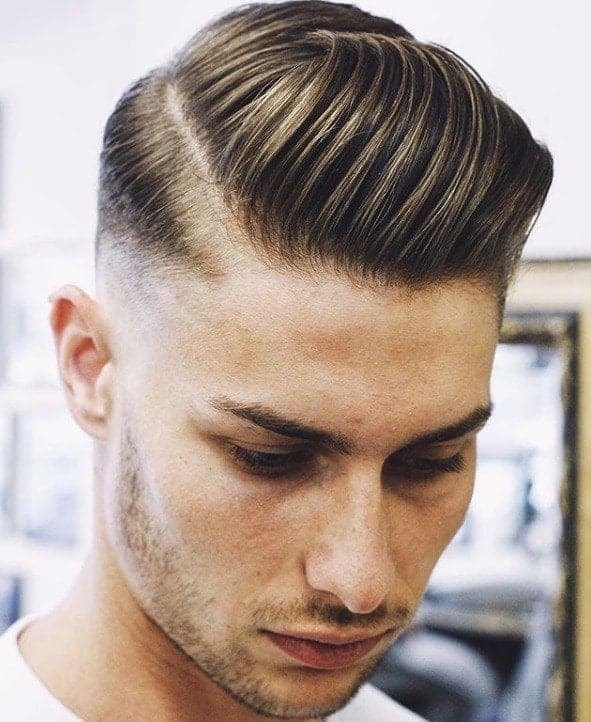
Where fine hair needs heavy product and often looks greasy, thick hair has the natural body to hold a swept-back shape with medium-hold product and still look clean. Pair it with a fade or undercut on the sides to keep the silhouette narrow. Keep the top at 4-6 inches and work a water-based pomade through towel-dried hair, combing straight back.
Ask your barber for: A slick back with an undercut or mid fade. Enough length on top to comb back, with the sides taken down significantly.
6. The Layered Medium Cut
If you want 3-5 inches all around, layers are non-negotiable for thick hair. Without them, medium-length thick hair becomes a solid mass that sits like a helmet. Strategic layering lets the same hair move naturally and respond to styling, your barber removes weight from specific sections while preserving length.
Ask your barber for: A medium-length layered cut with internal thinning. You want blended, invisible layers that reduce weight, not a visible step cut. Read our post on hair care mistakes to avoid for more on why skipping thinning actually backfires.
7. The Buzz Cut or Crew Cut
Sometimes the best approach is keeping it short and letting the density speak for itself. A buzz or crew cut on thick hair looks better than on any other type, even, full coverage with no thin spots. The crew cut works especially well, with about an inch on top, faded on the sides. Maintenance is as low as it gets, a trim every 3-4 weeks.
Ask your barber for: A crew cut with a #2 or #3 on top, faded to skin on the sides. With thick hair, even a #3 all over looks full and intentional.
8. Curtain Bangs
Curtain bangs have crossed from trend to legitimate men’s style, and thick hair wears them well. The hair parts in the middle and falls to either side of the forehead, framing the face. On thick hair, the bangs have enough weight to lie properly without constant adjustment. Best at 4-6 inches on top with bangs reaching the eyebrows, the key is thinning the bangs so they drape rather than stick out.
Ask your barber for: Curtain bangs with a center or off-center part, thinned through the bang section, and medium-length sides that blend into the top.
Products That Actually Work on Thick Hair
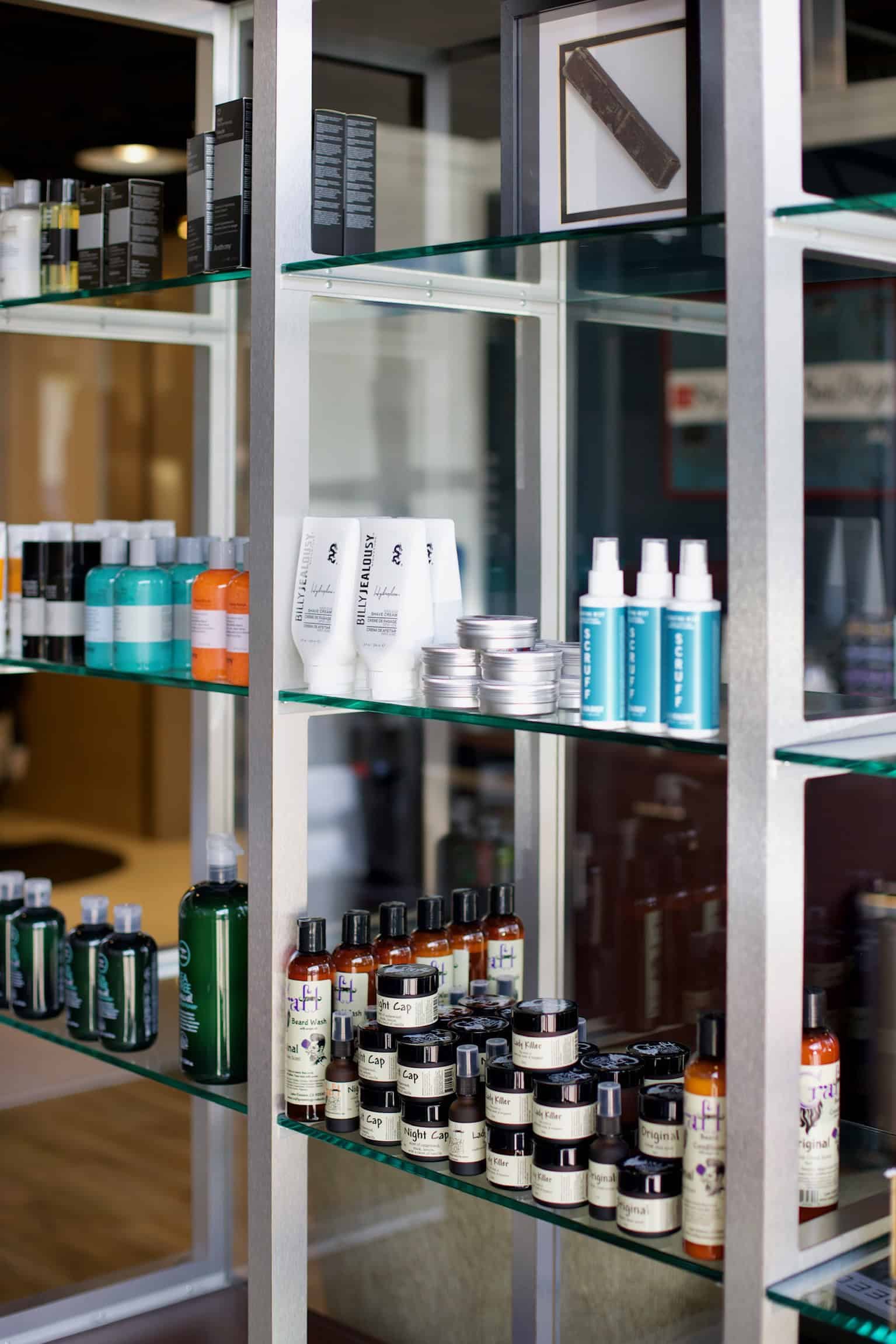
Product choice makes or breaks a thick-hair style. The wrong product either disappears into your hair (too light) or turns it into a crunchy shell (too heavy).
What works:
-
Matte clay. The go-to for most thick-hair styles. Medium to strong hold, natural finish, restyle-able throughout the day.
-
Styling paste. Slightly more pliable than clay. Great for textured crops and quiffs where you want movement.
-
Medium-hold pomade (water-based). Good for slick backs and pompadours. Washes out easily. Avoid oil-based pomades, they’re a nightmare to remove from thick hair.
-
Pre-styler or blow-dry spray. If you blow-dry (which really helps tame thick hair), a lightweight pre-styler adds control without weight.
What to avoid:
-
Hair gel. Creates a hard, crunchy cast that fights thick hair’s natural texture and flakes visibly as it dries.
-
Lightweight sea salt sprays (alone). On thick hair, they just add frizz without control.
-
Heavy waxes. Build up quickly and make thick hair look dull and lifeless after a few days.
Not sure which products are right? Our stylists can recommend the right one during your appointment, or check out our guide to the best men’s hair products.
Common Mistakes Men Make with Thick Hair
-
Waiting too long between cuts. Thick hair changes shape fast. Most styles need a trim every 3-4 weeks, not 6-8.
-
Skipping thinning or texturizing. Strategic thinning makes a style look intentional instead of heavy. You’re not losing volume, you’re shaping it.
-
Using too much product. A dime-sized amount of good clay does more than a golf ball of gel.
-
Washing every day. Thick hair doesn’t get greasy as fast as fine hair. Try every other day, with a rinse-only day in between.
-
Ignoring the blow dryer. Five minutes with a blow dryer tames thick hair more than any product. Blow-drying in the direction you want trains it to sit properly.
How to Talk to Your Barber About Thick Hair
Clear communication is the single most important thing you can do for your thick hair. Here are the phrases that actually help:
-
“I have thick hair and it puffs out after a week.” This tells your barber to remove weight in the right places, not just cut length.
-
“Can you thin the interior?” Interior thinning removes bulk without changing the visible shape.
-
“I want it to look good for 3-4 weeks, not just day one.” Good barbers cut for growth, not the moment.
-
Bring photos. A picture of the style you want is worth more than ten minutes of verbal explanation.
At 18|8, every appointment starts with a consultation, we assess your hair type, density, growth pattern, and face shape before picking up scissors. Browse our full range of men’s haircuts to get ideas before your visit.
Thick Hair vs. Thinning Hair: Two Sides of the Same Coin
The approach to thick hair and thinning hair is the same at a high level. Work with what your hair naturally does, not against it. Thick hair needs weight removed; thinning hair needs weight preserved. Different strategies, same principle. If you or someone you know is dealing with the opposite problem, check out our companion piece on the best haircuts for men with thinning hair.
Frequently Asked Questions
How often should men with thick hair get a haircut?
Every 3-4 weeks for most styles. Thick hair changes shape faster than other types, so what looked sharp at week two can look overgrown by week four.
Is thick hair better for certain face shapes?
Thick hair works with every face shape, the key is the right style. Round faces do well with height (pompadour, quiff). Square faces look great with textured crops. Oval faces can pull off almost anything.
Should I use conditioner on thick hair?
Yes. Thick hair tends to be drier because natural oils have a harder time coating every strand. A good conditioner every other wash keeps it soft and manageable.
Can thick hair be straightened?
Yes, though we’d recommend talking to your stylist first. Keratin treatments reduce volume and frizz for 3-4 months. Most of the time, the right cut and product make straightening unnecessary.
What’s the best hairstyle for thick wavy hair?
The textured crop and layered cut are standouts. Both embrace natural wave rather than fighting it. A medium-hold clay will define the waves without weighing them down.
Do thinning shears damage thick hair?
No. They’re a standard tool designed to remove bulk without changing length. When used correctly, they’re one of the best things your barber can do for thick hair.
Ready to Find Your Perfect Thick-Hair Style?
Thick hair is one of the best things you can have, once you know how to work with it. The right cut, the right product, and a barber who understands density can turn your biggest frustration into your best feature.
At 18|8 Fine Men’s Salons in 4S Ranch, we specialize in men’s hair. Whether you want a low-maintenance crew cut or a showstopper pompadour, we’ll get it right.
Book your appointment today:
-
Online: schedule your appointment
-
Call: (858) 914-5418
-
Visit: 10543 4S Commons Dr., Ste #176, San Diego, CA 92127
Your thick hair isn’t the problem. It never was. You just need the right person behind the scissors.
Last Updated: September 2026

